
August 3, 2026 – First impressions happen in a fraction of a second, and in today’s real estate market, that first impression almost always happens online. Before a buyer ever steps foot in your home, they’ve already decided whether or not it’s worth their time based on your listing photos. Staging your home well isn’t just about making it look pretty; it’s about telling a story that resonates emotionally with the people most likely to buy it.
Here’s how to do it right.
Start With a Buyer’s Mindset
Before you move a single piece of furniture, step back and ask yourself: Who is buying this home, and what are they looking for?
A young family wants to see space, light, and possibility. A downsizing couple wants to feel like the home is manageable and serene. When you stage with a specific buyer in mind, every decision, from what you leave on the counter to how you angle the sofa, becomes intentional.
This is the foundation of buyer psychology in home staging: you’re not decorating for yourself, you’re curating an experience for someone else.
The Psychology Behind Furniture Placement
How furniture is arranged communicates more than you might think. Here’s what buyers subconsciously pick up on:
Open pathways signal possibility. When furniture is arranged to create clear sightlines and easy movement through a room, buyers feel the home is larger and more livable. Cluttered or awkward arrangements create anxiety, even if buyers can’t articulate why.
Floating furniture creates intimacy. Pulling sofas and chairs away from the walls, even just a few inches, makes a room feel designed and intentional. Furniture pushed flat against walls reads as an afterthought, and ironically, makes rooms feel smaller.
Scale matters more than style. Oversized furniture in a small room is one of the most common staging mistakes. When a sofa dominates a living room, buyers feel cramped and can’t visualize their own belongings in the space. If you have the opportunity to swap out a bulky piece for something more appropriately sized before photos are taken, do it.
Anchor with rugs. Area rugs define zones and tell buyers where to “be” in a room. A rug that pulls the seating group together signals that this is a place for conversation, connection, and comfort, all things buyers are emotionally drawn to.
Symmetry builds trust. Symmetrically arranged spaces feel stable and calming. Matching lamps, balanced throw pillows, and even paired nightstands communicate that a home has been cared for, a detail that registers subconsciously with buyers long before they consciously notice it.
Personal Items: Less Is More (But Not Zero)
One of the most misunderstood rules of home staging is the advice to “depersonalize.” Many sellers swing too far in the opposite direction and strip their home of all personality, leaving it feeling cold and empty, like a hotel no one has checked into yet.
The goal isn’t to remove all personal touches. It’s to replace your story with a more universal one.
Remove: Family photos, personalized décor (monograms, custom name signs), religious or political items, children’s artwork on the refrigerator, and anything that signals the home belongs specifically to you.
Keep: Fresh flowers or greenery, a bowl of fruit in the kitchen, neutral throw blankets and pillows, a few well-chosen decorative objects, and anything that says “someone wonderful lives here.”
Why this works: Buyers need to be able to picture themselves living in your home. The moment they see a gallery wall of your family vacation photos, their brain subtly registers this as “someone else’s home.” Neutral but warm staging keeps the emotional door open.
Room-by-Room Staging Tips for Stunning Photos
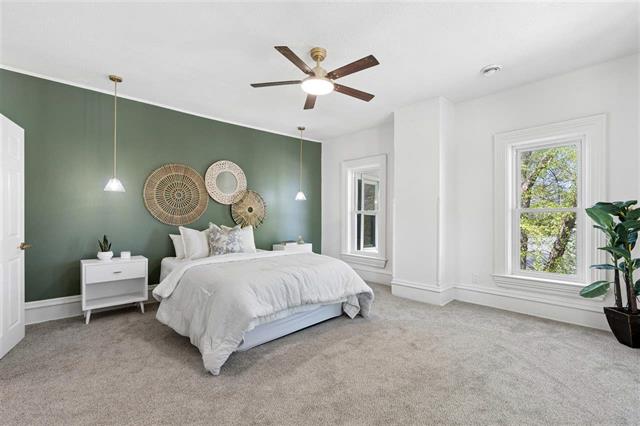
Bedroom staged at a home for sale in Solon, Iowa
Living Room Clear all surfaces except for one or two intentional accent pieces. Remove remote controls, magazines, and cords. Add a fresh throw to the sofa and a simple centerpiece to the coffee table, a candle, a small stack of books, or a low vase of greenery.
Kitchen Clear countertops almost entirely. Leave only one or two items that signal “this kitchen is used and loved”, a nice coffee maker, a fruit bowl, fresh herbs in a small pot. Make sure the sink is empty and the dish rack is put away.
Master Bedroom Dress the bed as if it belongs in a boutique hotel. Crisp, neutral bedding with layered pillows reads as luxurious without being over the top. Remove anything on nightstands except a lamp and one small, intentional item. Closet doors should be closed for photos.
Bathrooms Clear every surface. Store toiletries completely out of sight. Add a fresh, neatly folded towel set in a neutral color, and a small plant or candle if space allows. Make sure mirrors are streak-free, they’ll show up in every photo.
Curb Appeal Don’t forget the outside. Mow the lawn, sweep the front walk, add a fresh doormat, and consider a potted plant or two near the entrance. The exterior shot is often the first image buyers see, make it count.
Lighting: The Detail That Makes or Breaks Photos
Natural light is everything. Schedule your photography for the time of day when your home gets the most sunlight, and make sure every blind and curtain is open. Replace any burned-out bulbs before the shoot, and ensure that all light sources in a room match in warmth (mixing cool and warm bulbs creates an unflattering, uneven look in photos).
Turn on every light in the house, even during daytime shoots. This fills shadows and makes every room feel warm, bright, and welcoming.
Ready to Get It Right the First Time?
Staging a home for listing photos is part art, part strategy — and the stakes are high. Homes with professional-quality photos sell faster and often for more money. If you’re unsure where to start, or want to make sure you’re not leaving anything on the table, the best first step is getting a professional opinion from a trusted local REALTOR®.
Emily Hammes and Allison Dunmore are experienced Iowa REALTORS® who understand exactly what today’s buyers respond to — and what it takes to make a home shine in listing photos. They can walk through your home, identify opportunities you might have missed, and connect you with the right resources to get it market-ready.

Allison Dunmore and Emily Hammes , REALTORS, at a home in Iowa City
Reach out today for a consultation. Your home deserves to be seen at its absolute best.
Have questions about selling your home in Iowa? Contact Emily Hammes or Allison Dunmore at LKR Iowa — your trusted local real estate team.