
May 20, 2026 – The last kid moves out. The bedrooms upstairs go quiet. And suddenly the 2,800-square-foot family home in West Des Moines, Cedar Rapids, Ankeny, or Iowa City feels like more house than you actually use.
For Iowa homeowners stepping into the empty nester chapter, downsizing isn’t just an emotional decision, it’s a financial one. Many of you are juggling a real tension: you’d love a home that fits your new lifestyle, but you’re still writing tuition checks to Iowa State, the University of Iowa, UNI, or a private college out of state. The budget has to stay intact.
The good news? If you’ve owned your home for a while, the equity you’ve built is doing quiet, powerful work in the background. Used strategically, it can offset today’s higher interest rates and even shrink your monthly housing cost while you upgrade to a home that actually fits how you want to live now.
Here’s how to think it through.
Why Iowa Empty Nesters Are in a Stronger Position Than They Realize
Iowa home values have climbed steadily over the past decade and a half. A family home purchased in the late 2000s or early 2010s in markets like Des Moines, Cedar Rapids, the Quad Cities, Iowa City, Ames, or Dubuque has, in most cases, appreciated significantly while the mortgage balance has shrunk.
That gap, between what your home is worth and what you still owe, is your equity. And it’s the lever that makes downsizing possible without sacrificing your monthly budget or your kids’ college plans.
If you’ve been thinking, “Mortgage rates are higher than what I locked in years ago, so moving will cost me more,” you’re only looking at half the math. The other half is how much you can put down on the next home.
The Lifestyle Question: What Does the Next Home Need to Do?
Before talking numbers, talk lifestyle. The best downsize isn’t just smaller, it’s better suited to who you are now.
Iowa empty nesters tend to look for homes that share a few traits:
- Single-level or main-floor living so you’re not climbing stairs daily (and so the home works long-term).
- Less maintenance smaller yards, exterior upkeep handled by an HOA, newer mechanicals.
- Lock-and-leave ability so you can travel to see the kids, snowbird south, or take a long weekend without worrying about the house.
- Walkability or proximity to amenities coffee shops, trails, the gym, your church, your favorite restaurants.
- Room for hobbies a finished basement for woodworking, a sunroom, a garage stall for the project car, space to host the kids when they come home.
When you match the home to the life you actually want, downsizing stops feeling like loss and starts feeling like alignment.
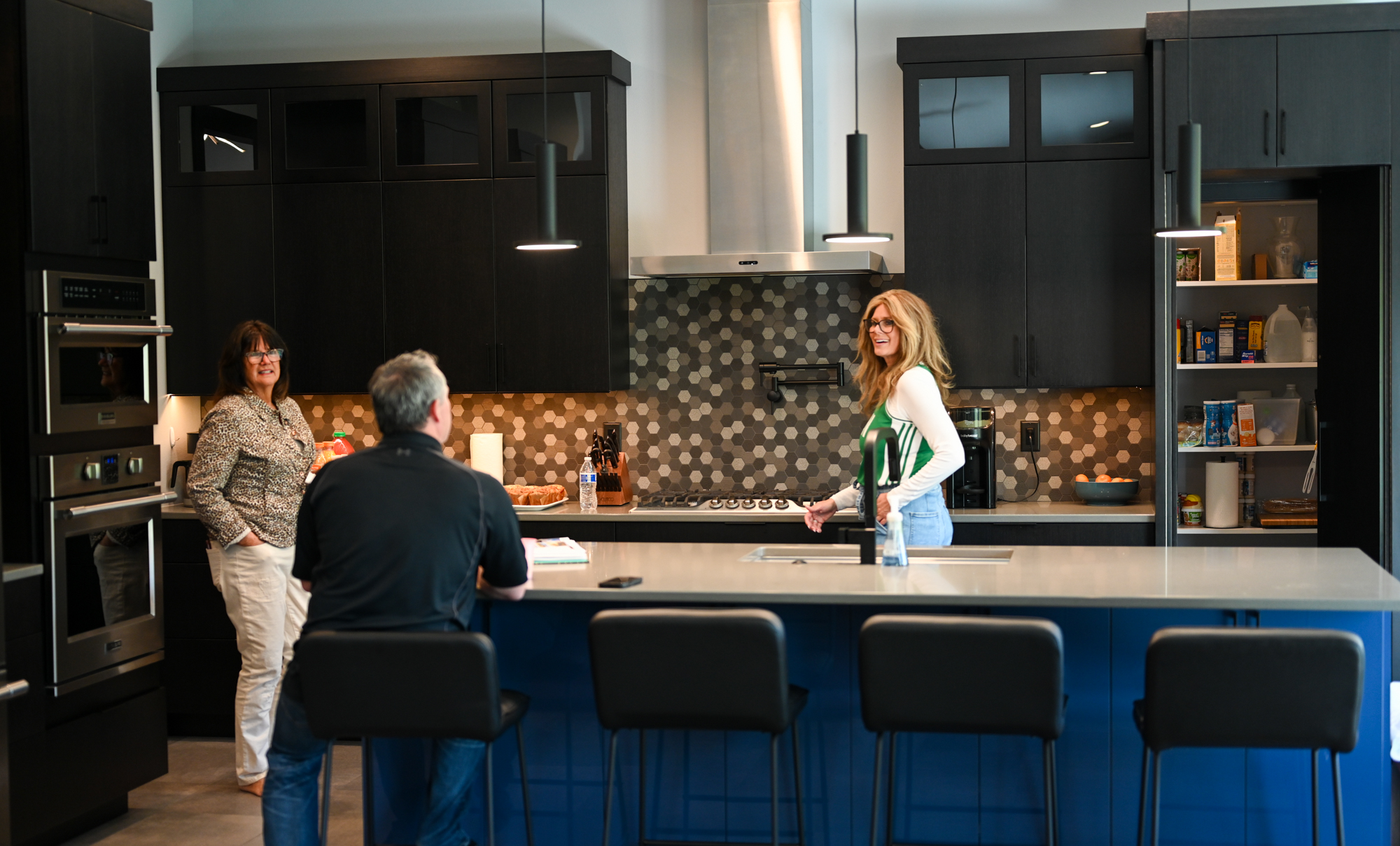
Five Home Styles That Work for Iowa Empty Nesters
Here are the housing options worth looking at in Iowa, especially if you want to stay active and keep maintenance low.
Ranch homes. Classic one-level living. Plenty of inventory across Iowa, often in established neighborhoods with mature trees and shorter commutes.
Patio homes and villa-style homes. Smaller footprint, attached or detached, often with an HOA that handles lawn care and snow removal. Common in newer developments around Tiffin, Coralville, Cedar Rapids, Marion, and North Liberty.
Townhomes. A nice middle ground, less square footage and yard than a single-family home, but more privacy and space than a condo. Often newer construction with main-floor primary suites.
Condos. Lock-and-leave at its purest. Good for buyers who want the freedom to travel and zero exterior responsibility. Iowa condo markets are strong in downtown Iowa City, and Cedar Rapids.
55+ active adult communities. A growing segment in Iowa. These offer right-sized homes plus community amenities, clubhouses, pickleball courts, walking trails, planned events. A great fit if you want built-in social opportunities.
The Equity Math: A Real Iowa Example
This is where the numbers do the heavy lifting. Let’s walk through a realistic scenario.
The current home:
- Purchased in 2008 for $240,000
- Original 30-year mortgage at 6.00%
- Remaining balance today: approximately $125,000
- Estimated current market value: $410,000
- Available equity: about $285,000 (before selling costs)
- Current principal-and-interest payment: roughly $1,439 per month
The new home: a 1,600 sq ft patio home or townhome at $325,000:
After selling costs (say, $25,000 for commissions, closing, prep), you’d net about $260,000 in cash from the sale. Now look at two paths.
Path A: Use most of the equity. Lower the monthly payment.
- Put $200,000 down on the new home.
- Finance $125,000 at today’s higher rate of 6.75%.
- New principal-and-interest payment: about $811 per month.
- That’s roughly $628 per month less than the old payment — even though the interest rate is higher.
- You also keep about $60,000 in your pocket for college tuition, emergency reserves, or investing.
Path B: Keep more cash for college. Stay at the same monthly payment.
- Put $75,000 down on the new home.
- Finance $250,000 at 6.75%.
- New principal-and-interest payment: about $1,621 per month.
- That’s close to your old payment, but now you’re sitting on roughly $185,000 in cash that can fund tuition, top off retirement, or stay invested.
Either way, the higher interest rate stops being the deal-breaker it seemed. The equity you’ve built, combined with appreciation that’s pushed your home value well above what you originally paid is what makes the move work.
Note: This example uses round numbers for illustration. Property taxes, insurance, HOA dues, and your actual rate will shift the picture. A local lender and Realtor can run real numbers for your situation.
Strategies to Stretch the Budget Even Further
A few moves can make the financials even stronger.
Time the sale and the purchase carefully. In many Iowa markets, listing in early spring can earn a premium. Working with an agent who knows your specific town matters.
Shop the loan, not just the home. Local Iowa lenders and credit unions sometimes beat national rates. Also ask about temporary rate buydowns (like a 2-1 buydown) or seller-paid points if you’re buying new construction.
Consider a slightly larger down payment to avoid PMI. If your down payment lands above 20%, you skip private mortgage insurance — that’s real monthly savings.
Look at homes that need light cosmetic work. Iowa buyers often pay a premium for fully updated homes. If you’re willing to swap countertops or refresh paint over your first year, you can pick up equity quickly.
Think long-term on property taxes and utilities. A smaller, newer, well-insulated home in Iowa typically means lower utility bills and often lower property taxes than the family-sized home you’re leaving. Build those savings into your budget projection.
Don’t Forget the College Math
If you still have a college student (or two) in the pipeline, downsizing can do double duty.
The cash you free up by tapping equity can:
- Cover tuition without taking out Parent PLUS loans at higher rates.
- Replace what you would have pulled from retirement.
- Sit in a high-yield savings account or 529 plan to earn interest while you spread payments out.
That’s the part many empty nesters miss. Your house isn’t just shelter, it’s been a savings account for the last 15 or 20 years. Right-sizing now lets you turn that savings into liquidity right when you need it most.
Staying Active in Your Next Chapter
The right downsized home in Iowa keeps your social and physical life intact. A few questions to ask yourself before you choose a neighborhood:
- How close am I to a trail, a YMCA, or a gym I’d actually use?
- Can I walk to coffee, dinner, or a friend’s house?
- Is there a community here, neighbors, church, clubs that pulls me out the door?
- If I want to travel for a few weeks, can I lock the door and go?
- Will my adult kids and future grandkids have room to stay when they visit?

Grandkids in the garden when visiting
The empty nest years should feel like upgrade, not retreat.
What to Do Next
If you’re an Iowa homeowner thinking about downsizing in the next 6 to 18 months, three steps move the ball forward:
- Get a current value estimate on your home. Not a Zillow number, a real opinion from a local LKR agent who knows your block.
- Talk to a lender about your buying power. You’ll be surprised how much equity changes the picture, even with today’s rates.
- Tour two or three different home styles a patio home, a townhome, a ranch. Walking through them changes the conversation. You’ll know immediately what fits.
Empty nest doesn’t have to mean an empty plan. With Iowa’s strong home values and your years of equity building, you have more options than you think and a real path to a home that fits the next 20 years of your life without breaking the budget that still has to cover college.
Thinking about downsizing in Iowa? Reach out to our team at LKR for a no-pressure conversation about your home’s current value and the right next-home options for your goals.